On June 17, 2006, in Cologne, Germany, Asamoah Gyan chested down a through ball against the Czech Republic and fired past Petr Čech inside 68 seconds.
The report indicates that on June 17, 2006, in Cologne, Germany, Asamoah Gyan chested down a through ball against the Czech Republic and fired past Petr Čech inside 68 seconds.
It further notes that ghana’s first-ever World Cup goal was scored by the man who would define everything that followed.
They won 2-0, beat the United States to reach the round of 16, and lost to Brazil. A nation that had never been to a World Cup left Germany believing it belonged.
Four years later, in South Africa, they went further still — to the quarter-finals, to extra time, to the penalty that hit the bar. Then came Brazil 2014: a government plane reportedly carrying $3 million in cash for bonus payments, a squad that argued in public before it played, and a group-stage exit that felt less like defeat than like unraveling.
Qatar 2022 was quieter but no more convincing, with an early exit and a team that looked like it was still searching for something it had lost somewhere between Johannesburg and Brasília.
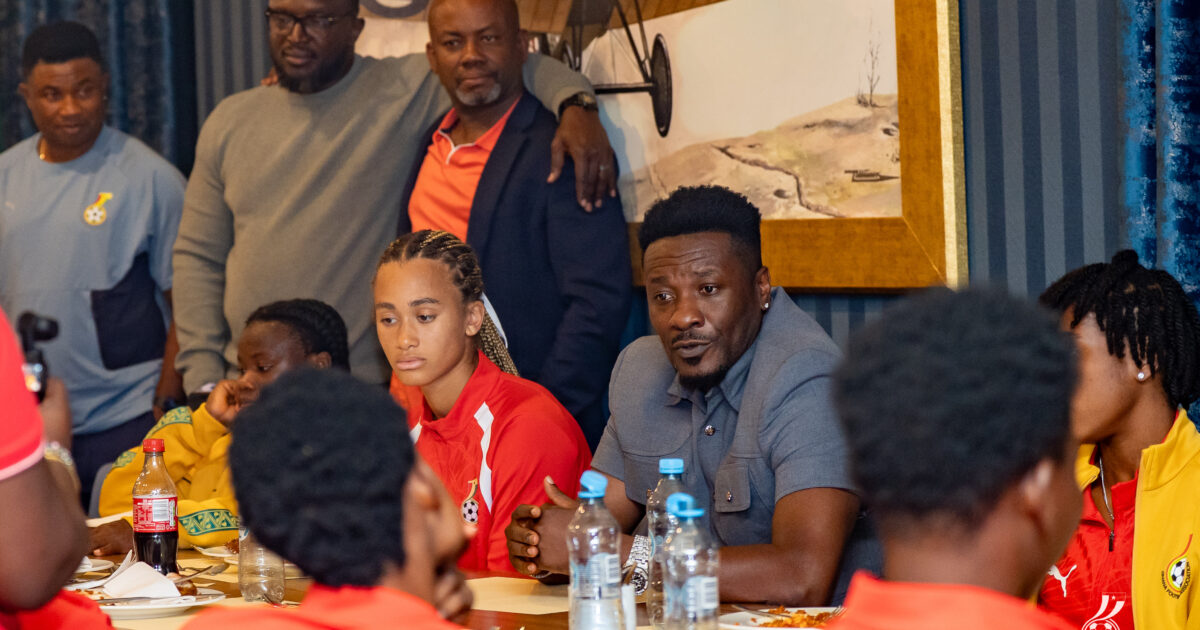
Twenty years after that first goal in Cologne, Asamoah Gyan will watch from the stands as Ghana’s official ambassador while a new generation tries to finish what he started.
On December 5, 2025, Gyan stood in a ceremony hall in Washington, DC, as Ghana’s name was drawn into Group L alongside England, Croatia, and Panama. Six World Cup goals, more than any African in history. The penalty against Uruguay. The crossbar. All of it is present in the room without being said.
The camera found his face as England’s name came out of the pot. He beamed.
Afterwards, someone asked what the World Cup still meant to him. “When I see the World Cup, it brings back what we did. I’m happy. It’s an honour, but I didn’t do this by myself. You cannot judge it. We had our time. What we have to do is support this new generation to achieve what we maybe didn’t do.”
Ghana does that. It holds its legends close, and it holds its grief closer.
On a cold Johannesburg night in July 2010, Ghana stood at the edge of something permanent. A World Cup semi-final. Extra time. Luis Suárez handled on the line. Red card. Penalty. Asamoah Gyan stepped forward, the continent holding its breath.
The moment did more than end a match. It created a reference point that Ghana has not escaped since. For weeks that summer, they had embodied possibility, not just progress but arrival.
The 2010 generation carried coherence even in the absence of Essien. Gyan, Appiah, Prince-Boateng, Muntari, the Ayews — their roles, their relationships, their purpose — all felt understood.
What followed was not a collapse in a single moment but erosion over time. Bonus disputes spilt into public view. Coaches came and went without leaving an imprint. Administrators stumbled from one controversy to another. Performances grew inconsistent, then predictable, then forgettable.