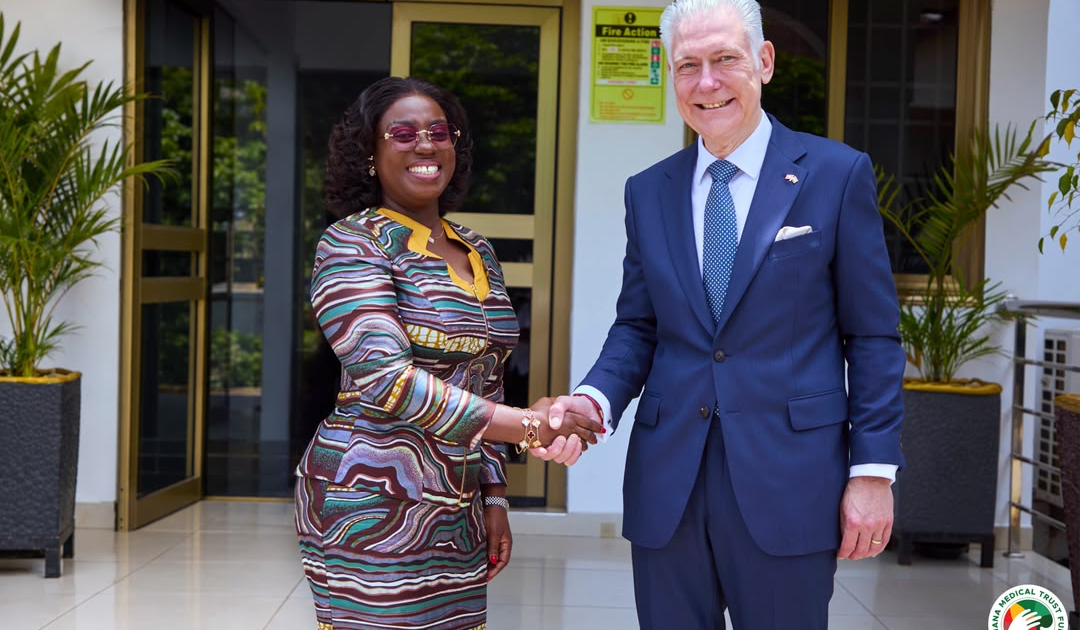
The Ghana Health Service (GHS) will begin a nationwide integrated Mass Drug Administration (MDA) campaign from June 20 to July 10, targeting millions of people in districts affecte
The report indicates that the Ghana Health Service (GHS) will begin a nationwide integrated Mass Drug Administration (MDA) campaign from June 20 to July 10, targeting millions of people in districts affected by Bilharzia, Elephantiasis, and River Blindness.
It further notes that the exercise forms part of Ghana’s efforts to eliminate neglected tropical diseases (NTDs) as a public health threat by 2030.
Speaking at a press briefing in Accra on Tuesday, June 17, the Director-General of the Ghana Health Service, Dr. Samuel Kaba Akoriyea, identified poor sanitation, environmental pollution, and unsafe water sources as major factors undermining the country’s efforts to eliminate the diseases.
While emphasizing the importance of preventive medication, Dr. Kaba Akoriyea warned that medical interventions alone would not be enough to achieve lasting success.
“When you take into consideration sanitation, water, and environmental issues, we contribute to the resurrection and spread of these diseases,” he said.
“These diseases have to be looked at from a one-health approach. Our environment, our actions and inactions all influence their spread.”
Neglected tropical diseases continue to affect some of Ghana’s most vulnerable populations, causing disability, stigma, loss of productivity, and economic hardship. According to the Ghana Health Service, the diseases can keep children out of school, reduce household incomes and slow community development.
River blindness, which is transmitted through the bites of infected black flies that breed near fast-flowing rivers and streams, remains endemic in 149 districts across Ghana. Although sustained interventions since 1997 have significantly reduced the burden of the disease, 86 districts still require mass drug administration.
Dr. Kaba Akoriyea noted that Ghana has made remarkable progress in tackling elephantiasis, with transmission interrupted in 114 endemic districts, leaving only a few districts requiring continued intervention.
Bilharzia, however, remains a public health concern in communities across the country, largely due to poor access to clean water and sanitation. The disease is contracted through contact with contaminated water and can lead to blood in urine or stool, anemia, poor growth in children, and serious reproductive health complications in women.
To accelerate elimination efforts, the upcoming campaign will cover 86 River Blindness-endemic districts across 15 regions and is expected to reach approximately 6.7 million people.
Treatment for elephantiasis will target about 266,000 people in two endemic districts, while community deworming against bilharzia will be carried out in 13 districts across eight regions, reaching nearly one million people.
The director-general emphasised that the medicines to be distributed have been used safely for many years and are recommended by the World Health Organization.
“These medications are safe, effective, and vital in protecting families from river blindness, elephantiasis, and bilharzia,” he said.