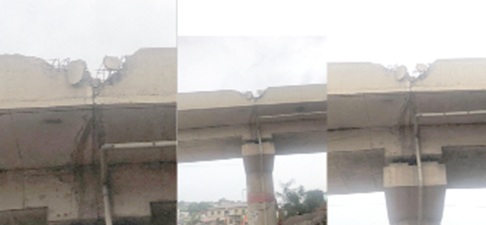
Every rainy season, Africa relives the same painful story. Television stations broadcast images of submerged communities, collapsed bridges, stranded commuters, devastated business
The report indicates that floods, filth, failing infrastructure, wasteful expenditure, and dangerous partisanship all expose one uncomfortable truth: Africa cannot solve problems that everyone believes belong to someone else.
It further notes that every rainy season, Africa relives the same painful story. Television stations broadcast images of submerged communities, collapsed bridges, stranded commuters, devastated businesses, and grieving families. Governments declare emergencies. Opposition parties blame governments. Governments blame climate change. Citizens blame local authorities. Local authorities blame inadequate funding. Social media explodes with outrage, accusations, and endless commentary. Then, just as predictably as the floods arrived, the waters recede, public attention shifts elsewhere, and life resumes as though nothing has happened. Until the following rainy season, when the same tragedy returns, often in the very same communities.
The disturbing reality is that many of these disasters are neither sudden nor entirely natural. They are the cumulative result of years of neglect, poor planning, weak enforcement, and, perhaps most dangerously, a culture in which responsibility is endlessly transferred from one person to another. Every problem becomes somebody else’s fault. Every failure belongs to another institution. Every crisis is blamed on another generation, another political party, another government, another community, or another circumstance.
Perhaps that is why one uncomfortable question continues to echo louder than the floodwaters themselves:
This question is not directed at governments alone. Nor is it aimed solely at politicians, civil servants, or public institutions. It is a question that every African must ask while looking into the mirror. Because nations do not become dysfunctional overnight. They become dysfunctional when responsibility becomes optional, and blame becomes habitual.
The culture of blame has become our national pastime
There is perhaps no continent where blame travels faster than responsibility. When roads deteriorate, governments are blamed. When hospitals become overwhelmed, ministries are blamed. When corruption emerges, politicians are blamed. When schools decline, education authorities are blamed. Yet remarkably few people pause to ask a more personal question: What part did I play in creating or tolerating this problem?
This is not to absolve governments of their enormous responsibilities. Governments must govern, regulate, enforce, and plan. But governments alone cannot stop citizens from dumping refuse into gutters. Governments cannot personally maintain every public toilet, protect every public building, or prevent every act of indiscipline if society itself has normalised such behaviour.
The uncomfortable truth is that a nation where everyone blames others eventually becomes a nation where nobody feels responsible for solving anything.
“When every finger points outward, none points toward the mirror.”
Interpretation: A society that constantly searches for someone else to blame rarely finds the courage to correct itself.
Climate scientists are correct that extreme weather events are becoming more frequent. The United Nations has repeatedly warned that climate change will intensify flooding across vulnerable regions, including much of Africa. Yet climate change does not throw plastic bags into storm drains. Climate change does not build houses across waterways. Climate change does not approve unauthorised developments on wetlands. Human beings do.
Walk through many African cities before the rains arrive. Gutters are often filled with discarded bottles, food containers, mattresses, broken furniture, tyres, construction waste, and every imaginable form of refuse. Markets spill onto drainage channels. Informal structures block natural waterways. Plastic waste accumulates month after month.
Water simply follows the laws of physics. It cannot negotiate with human negligence. It flows where it can and floods where it cannot.