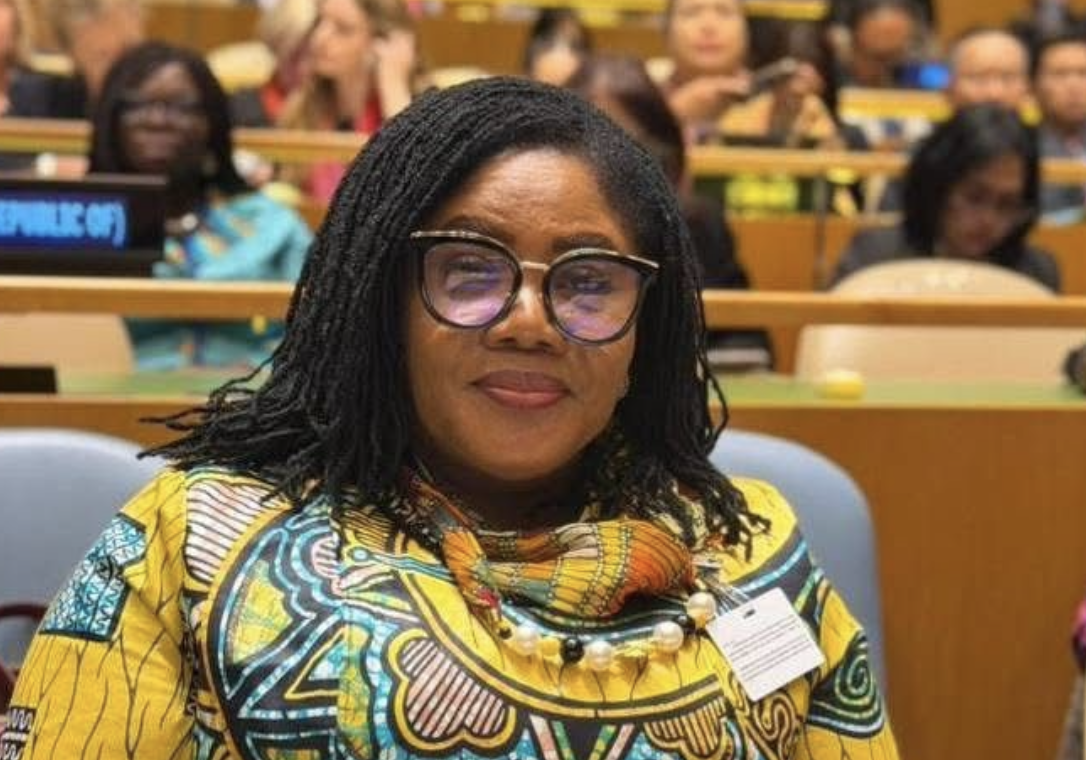
Former Chief of Staff Akosua Frema Osei-Opare has called for stricter enforcement of the country's existing anti-corruption laws rather than the passage of new ones.
The report indicates that former Chief of Staff Akosua Frema Osei-Opare has called for stricter enforcement of the country’s existing anti-corruption laws rather than the passage of new ones.
It further notes that describing corruption as an endemic burden on the country, she explained that anti-corruption laws went through rigorous processes, including academic and civil society input, before being passed into law and argued the country’s challenge was not in drafting new laws but in enforcing the ones already on the books, regardless of which government is in power.
“We should have passion to make the corruption laws work. It should not work only after a change of government; it must work during the government’s tenure.
“We always look at only political appointees, but gladly the Public Accounts Committee is aired publicly, and have we taken into account the Auditor General’s reports and asked who the big wigs behind them are?
“I am surprised that CSOs don’t see that unless it’s a high-profile person before it becomes an issue. We need to ask for accountability on that,” she stated at a forum in Accra last Wednesday.
Mrs Osei-Opare urged a closer scrutiny of Auditor-General reports and Public Accounts Committee (PAC) proceedings to uncover the structural drivers of graft within the civil and public service.
Dubbed “Time with the Politician,” the third edition of the interactive forum was organised by the Konrad-Adenauer-Stiftung (KAS) Ghana and the Department of Political Science at the University of Ghana (UG).
The forum, which centred on diverse issues ranging from public leadership and development, among other things, formed part of efforts to create a platform for students of political science to interact with experienced political leaders.
Drawing on her experience as a former deputy minister, she states that budgets were controlled by civil servants who must follow due process and says the country’s approach to corruption was skewed, often applying scrutiny selectively depending on which party is in government.
Asked what pushed the New Patriotic Party (NPP) into opposition, Mrs Osei-Opare stated the party governed extensively but failed to sufficiently engage constituents at the grassroots level, a lesson she stated the party had since taken on board.
On the relationship between politicians and the media, she stated criticism was often difficult to accept when it appeared to stem from bias rather than objective analysis.
She, therefore, urged the media to embrace its role as the fourth estate without resorting to criticism that demeans rather than corrects.
Mrs Osei-Opare, an economist, academic, and development practitioner, traced her path into public service from student politics through fieldwork with the Food and Agriculture Organisation (FAO) in Nigeria, the Netherlands Development Organisation, and ActionAid before her time in government.
She stated her conviction that every citizen deserved access to education, jobs, and healthcare, regardless of geography, shaped her support for policies such as the Free Senior High School (Free SHS) programme during her tenure as Chief of Staff.