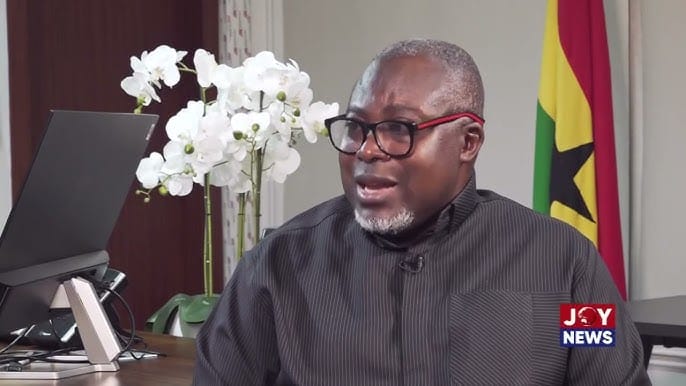
The Head of Fintech and Innovation at the Bank of Ghana (BoG), Elhanan Owureku Asare, has warned that rising digital fraud could weaken public confidence in Ghana’s push towards a
The report indicates that the Head of Fintech and Innovation at the Bank of Ghana (BoG), Elhanan Owureku Asare, has warned that rising digital fraud could weaken public confidence in Ghana’s push towards a cash-lite economy.
It further notes that he says trust is the foundation of digital financial services, and any loss of confidence could push consumers back to cash.
“Trust is a currency. Trust in itself is a currency. The moment we lose that trust, the trajectory that we are on towards a cash-lite economy is at risk,” Mr Asare said.
He stated Ghana’s digital payment system has grown because people increasingly trust mobile money, bank apps and other electronic channels to move funds quickly.
But he warned that repeated instances of fraud could reverse those gains.
“The moment we lose trust, we will default back. People will say, ‘Look, I am better off holding the cash than relying on digital channels,'” he said.
Mr Asare stated banks, fintech companies, mobile money operators and the central bank must work together to protect public confidence in digital finance.
“I think everybody – banks, fintechs, the central bank – we want to make sure that we safeguard that trust related to digital financial services,” he added.
His comments come as reported fraud cases across Ghana’s financial sector continue to rise.
The Bank of Ghana’s 2024 fraud report shows that banks, specialised deposit-taking institutions and payment service providers recorded 16,733 fraud cases in 2024, up from 15,865 in 2023.
The total value at risk increased by 13 per cent, from GH¢88 million in 2023 to approximately GH¢99 million in 2024.
Payment service providers, which include electronic payment platforms, accounted for most of the reported incidents.
They recorded 15,673 electronic fraud cases in 2024, compared with 14,655 in 2023.
The value at risk in that sector also rose by 18 per cent, from GH¢16 million to GH¢19 million.