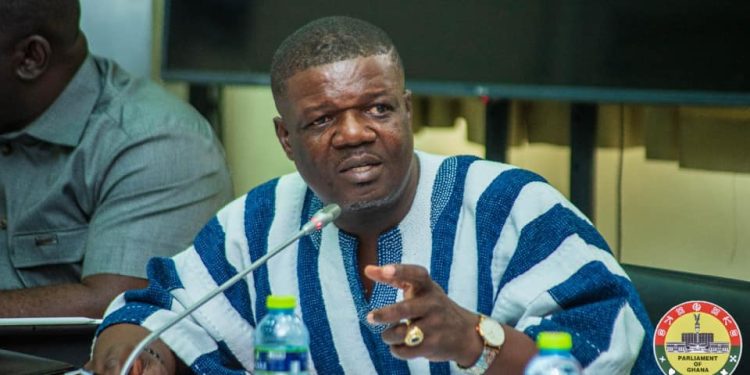
Long before the landmark criminal proceedings of 2025 that terminated on Monday July 20, 2026, the legal operations and corporate activities surrounding Akonta Mining Company Limit
The report indicates that long before the landmark criminal proceedings of 2025 that terminated on Monday July 20, 2026, the legal operations and corporate activities surrounding Akonta Mining Company Limited were subjected to rigorous judicial scrutiny in the civil courts. In Akonta Mining Company Limited & 4 Others v. The Attorney General & 3 Others (Suit No. E12/51/13), delivered on January 18, 2019, at the Automated High Court, Sekondi, the court confronted a suit alleging state trespass, unlawful conversion, physical looting, and extortion arising from government anti-galamsey operations in May and June 2013.
It further notes that this suit centered on whether state security agencies and local authorities committed actionable civil torts of trespass, conversion, and extortion when destroying camp structures and seizing heavy equipment on Akonta Mining’s concession, or whether their actions were entirely justified under statutory environmental mandates and the common law doctrine of public necessity. The High Court resolved all issues against the mining entities, holding that a prospecting licence holder engaged in unapproved, illegal small-scale gold mining with foreign nationals cannot maintain an action in tort against state actors intervening in the public interest.
The lawsuit endured a long trial process, passing through four distinct High Court judges before reaching its final conclusion:
The five Plaintiffs who instituted the action were:
The Plaintiffs were represented by counsel Egbert Faibille Jnr. Esq. They sought extensive declaratory, restitutionary, and compensatory reliefs, including:
The 1st, 2nd, and 3rd Defendants were represented by Mrs. Frances Mullen Ansah, while the 4th Defendant was represented by Samuel Ahorlo-Adinkrah Esq.
The core defence: The Defendants denied all claims of looting, arson, and extortion. They contended that the Plaintiffs were illegally mining gold, rather than merely prospecting and had diverted and severely polluted the Tano River. Furthermore, the Defendants asserted that Chairman Wontumi illegally engaged over 100 Chinese nationals in small-scale mining operations. The Task Force acted under the statutory mandate of the Inter-Ministerial Task Force set up by the President in May 2013 to halt illegal mining, abate environmental nuisance, and seize equipment under Act 703 and Act 900. The 4th Defendant categorically denied demanding or receiving GH¢70,000.00.
To discharge the burden of proving that the Plaintiffs were engaged in illegal mining, the Defendants called several technical officers and operational commanders whose evidence proved decisive:
DW1 testified that after receiving complaints from local communities, he inspected the site near Sefwi Ekura and confronted Chairman Wontumi:
“He found a large number of people mining and when he inquired, he was told that the 5th plaintiff had employed them to conduct mining. The 5th plaintiff was named as the financier of the activities. He took the contact number of the 5th plaintiff on phone. He stated the 5th plaintiff confirmed the information describing himself as the President of the Ghana Chinese Chamber of Commerce. The 5th plaintiff further stated he was financing their acquisition of small scale applications over there and that he was holding a service support company issued by the Minerals Commission.”
DW5 conducted field measurements and plotted coordinates on the national cadastral system:
“Yes we saw that the areas we visited have been mined, in some places they have put back the soil (backfilling) and in some places they have not done that and there were series of ponds in those areas, vast land has been cleared and we also saw excavators also mining and dumping the soil in the Tano river. In all, we observed that they have mined within their concession and outside their concession to the river body that is to the very bank of the Tano river. So what we took geographical coordinates that is the longitude and latitude of those points that we visited, we took three points and plotted it on our cadastral system to see where they fall and what came out was that after the process you could see that Akonta has mined within their concession and outside their concession, has also gone beyond the buffer zones or the reservation for the river by law.”
DW3 testified regarding an inspection where foreign workers fled upon being questioned:
“They saw a lot of mining activities going on with excavators. They saw that the activities were so close to the Tano river sometimes between 60 to 70 meters from the bank. They asked them to stop as what they were doing was illegal. The Manager they were introduced to was a Chinese. There were other four Chinese. They asked for the licence they were operating with and were made to speak to the 5th plaintiff. They told the 5th plaintiff that what was going on was illegal as they were mining close to the river. Whilst talking to the 5th plaintiff, the Chinese bolted.”