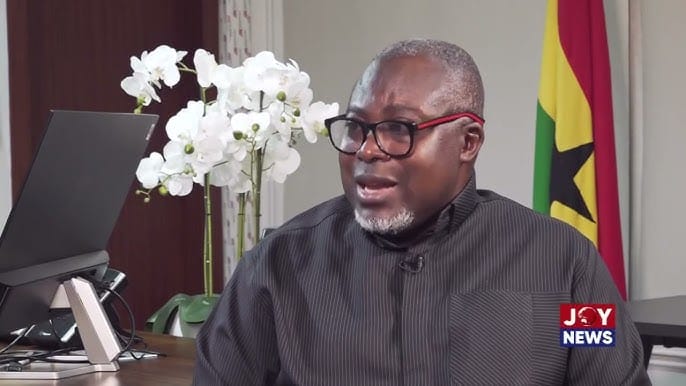
An economics lecturer at the University of Ghana, Professor Patrick Asuming, has described the recent depreciation of the Ghana cedi as manageable and within acceptable margins, in
The report indicates that an economics lecturer at the University of Ghana, Professor Patrick Asuming, has described the recent depreciation of the Ghana cedi as manageable and within acceptable margins, insisting that the situation does not yet suggest a major threat to macroeconomic stability.
It further notes that speaking on Joy FM’s Top News Night on Monday, May 25, Prof. Asuming stated although the local currency had weakened slightly over the past few weeks, the movement remained relatively moderate when compared to Ghana’s historical experiences of sharp currency declines.
“Even though in the last couple of weeks, we’ve seen a little bit more depreciation than usual, we have to understand that compared to our historical rates, it’s still within reasonable limits,” he said.
According to him, the current trend reflects a deliberate policy direction by the Bank of Ghana to allow controlled flexibility in the foreign exchange market rather than aggressively defending a fixed exchange rate.
“I think that the Bank of Ghana definitely has more than enough reserves to be able to keep the currency stable,” he stated.
“We have to understand that they have adopted a new framework for conducting the interventions in the forex market. What they are trying to do is to prevent massive swings in the currency, massive depreciation,” he explained.
The comments come amid growing public concerns over the cedi’s recent losses against major foreign currencies, particularly the US dollar, after months of relative stability that had strengthened confidence in the economy.
The cedi recorded one of its strongest performances in recent years in 2025 following gains attributed to tight monetary policies, improved foreign reserve levels, the ongoing International Monetary Fund (IMF)-supported programme, and increased inflows from gold and cocoa exports.
However, recent movements in the foreign exchange market have triggered fears among businesses and importers about a possible return to prolonged instability.
But Prof. Asuming maintained that the current fluctuations should not be viewed as alarming.
He explained that the central bank’s intervention strategy now focuses more on cushioning the economy against severe shocks rather than artificially holding the cedi at a rigid rate.
“Some of the interventions that they are doing is to make sure that you’re smoothing the rate of depreciation. So even though people are expressing concerns about the rate of depreciation, I think this falls within what you would consider reasonable in terms of keeping the currency within a small band and not allowing massive depreciation of the currency,” he stressed.
The economist further indicated that the period of rapid appreciation witnessed last year was unlikely to continue, as the Bank of Ghana appeared to be pursuing a more flexible exchange rate management system.
“We have to understand that the kind of appreciation that we saw last year, those days are gone,” he noted.