Ghana's own procurement statute sits within a recognisable global family of reform. The UNCITRAL Model Law on Public Procurement — the United Nations' template instrument, revised
The report indicates that why Ghana needs a new architecture — GOGPO, EwRP and BSNC — to convert procurement from the nation’s largest source of leakage into its largest lever for growth
It further notes that public procurement is the single largest channel of government expenditure in Ghana, absorbing an estimated 70 per cent of national annual budgets across Ministries, Metropolitan and Municipal Assemblies, Departments and Agencies (MMDDAs). It is also, on the evidence of successive Auditor-General reports, the channel most persistently exposed to irregularity, inefficiency and outright value leakage. In 2024 alone, the Auditor-General uncovered GH¢18.42 billion in public-sector financial irregularities — a 109 per cent jump on the prior year — of which GH¢2.8 billion was attributed to procurement and administrative infractions, with a further GH¢871.8 million lost specifically to contract-management breaches (Ghana Audit Service, 2025).
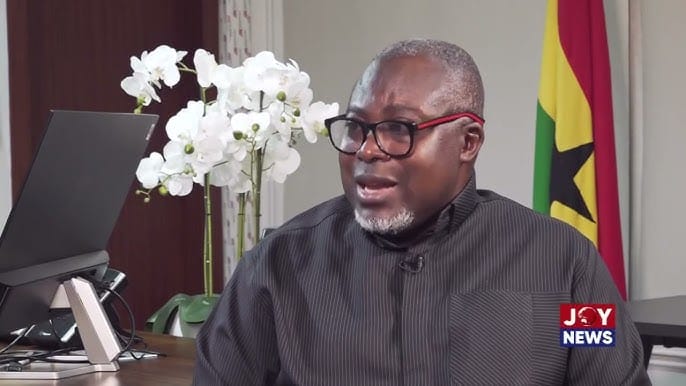
This article builds on two works by Dr. Kankson Kpentey, Head of Procurement at GCB Bank PLC and Executive Director of South-Western Pacific International Limited: a January 2023 media engagement with Joy Business calling for the wholesale reconstruction of Ghana’s public procurement architecture, and a subsequent, more detailed November 2023 policy paper, “Reorchestration vs. Reconfiguration of Public Sector Procurement,” which sets out the full institutional design. Sequencing and elaborating on both, the article presents a technical blueprint: a new Government of Ghana Procurement Organisation (GOGPO), reporting to Parliament rather than the Finance Ministry, alongside a reconstituted, independent Public Procurement Authority; a complete governance organogram and category management tree; an Enhanced Public Procurement Act; a No-Budget-No-Procurement-No-PO-No-Payment Source-to-Pay control regime enforced through an Enterprise-wide Resource Planning (EwRP) platform; and a Breaches, Sanctions and Non-Compliance (BSNC) league table with a live, PowerBI-driven performance dashboard.
The article situates these recommendations against global, continental and regional benchmarks — the World Bank’s estimate that public procurement equals 12–20 per cent of global GDP, the OECD’s finding that 8–25 per cent of procured value is lost to mismanagement or corruption, and the African Union’s Agenda 2063 and AfCFTA integration agenda — and against Ghana’s own legal architecture under the Public Procurement Act, 2003 (Act 663) as amended by Act 914 (2016), and the Public Financial Management Act, 2016 (Act 921). It closes with a business-process-reengineering roadmap and an illustrative five-year GDP simulation showing the scale of the growth dividend available if procurement leakage is converted into productive public investment.
Speaking to Joy Business in a media engagement that forms the empirical and rhetorical spine of this article, Dr. Kankson Kpentey argued that Ghana’s development and growth aspirations are being quietly eroded by an architecture of public procurement that was never designed for the scale of public spend it now carries. “There is the need for us as a people and government to reconstruct the architecture of procurement in the public sector space for optimal and consistent benefit realisation,” he told Joy Business, calling specifically for a legislated successor to the erstwhile Ghana National Procurement Agency (GNPA) concept — a Ghana Government Procurement Organisation (GOGPO) reporting to Parliament as appointing and reporting authority, rather than to the Finance Ministry, an executive arm of government.
Ten months later, in a more detailed policy paper titled “Reorchestration vs. Reconfiguration of Public Sector Procurement” (Kpentey, 2023, November 1), Dr. Kpentey extended that initial call into an implementable institutional design — a full governance organogram, a category management tree, a funding model, and a set of enforceable process controls. This article sequences both works: the January 2023 media engagement supplies the founding diagnosis and rationale, while the November 2023 policy paper supplies the structural detail — the organogram, the category tree, the Source-to-Pay control regime and the performance-reporting architecture — that renders the reconstruction implementable rather than aspirational.
This is not a marginal administrative preference. Because procurable expenditure constitutes roughly 70 per cent of national annual budgets, the way it is organised, governed and executed is, in effect, the way the state itself is organised, governed and executed. Every leakage point in the procurement value chain is a leakage point in the nation’s capacity to build roads, equip hospitals, pay contractors on time and create jobs. The remainder of this article develops that thesis in seven moves: first, the audit evidence for the scale of the problem; second, the global economics of procurement leakage; third, continental and regional best-practice benchmarks; fourth, Ghana’s current legal and institutional architecture; fifth, the technical reconstruction blueprint drawn from both works, including the full GOGPO organogram and category tree; sixth, a process-reengineering roadmap; and finally, an illustrative GDP simulation.
Dr. Kpentey’s original media engagement drew on the 2021 and 2020 Auditor-General reports. “The sum of the irregularities and the financial attributions assigned in the 2021 Audit Report … was a circa GH¢17.5 billion, out of this Procurement, Stores and Contracts constituted a circa GH¢591 million, representing 3.4 per cent of the total irregularities reported,” he noted, adding that the comparable 2020 figures were GH¢12.9 billion in total irregularities, of which procurement, stores and contracts contributed GH¢947 million, or 7.4 per cent — improvement, on his reading, of roughly 118 per cent year-on-year in the procurement share.
Extending that same trend line to the most recent data materially changes the picture. Total irregularities fell to GH¢15.1 billion in 2022 and GH¢8.8 billion in 2023 — the low point of the five-year series and, at the time, a plausible signal that reforms were taking hold (Public Services Commission, 2024). That optimism did not survive 2024. The Auditor-General’s report on the public accounts for the year ended 31 December 2024 recorded total irregularities of GH¢18,415,673,589 — a 109 per cent increase on 2023 — of which GH¢15.57 billion was classified as recoverable and GH¢2.84 billion as administrative infractions comprising procurement irregularities, delayed contract payments and undocumented stores (Ghana Audit Service, 2025; MyJoyOnline, 2025a).
Three features of the 2024 report are especially instructive for the procurement-reconstruction argument. First, the energy sector — principally the Electricity Company of Ghana (ECG) — accounted for approximately 86 per cent of the year’s total irregularities, including under-declared revenue of GH¢2.95 billion, an additional GH¢251 million paid to intermediaries instead of direct manufacturer procurement, and a GH¢75 million digital-collections contract executed without a signed agreement (BusinessDay Ghana, 2025; MyJoyOnline, 2025b). Second, contract-management irregularities alone — largely unpaid Interim Payment Certificates and unenforced contract clauses — reached GH¢871.8 million, the highest figure in the preceding six years (MyJoyOnline, 2025c). Third, and most tellingly for the institutional-design argument advanced below, the Auditor-General attributed the recurrence of these breaches not to gaps in the law but to poor internal controls, weak audit-committee oversight and “flagrant disregard” for existing statutes — the Public Procurement Act, the Public Financial Management Act and the Audit Service Act among them (MyJoyOnline, 2025a). That diagnosis is corroborated independently. IMANI Africa’s third Fiscal Recklessness Index isolated GH¢4.9 billion in discrepancies among MDAs between 2021 and 2023, equal to roughly 2.36 per cent of GDP in 2023 alone, and found the Ministry of Finance itself — the body currently vested with procurement oversight under the Public Financial Management Act — carrying the highest recklessness score among all institutions assessed (Imani Africa, 2025). The coincidence of that finding with Dr. Kpentey’s structural recommendation — that procurement oversight should shift from the Finance Ministry to a Parliament-facing GOGPO — is difficult to treat as accidental.
Ghana’s experience is a national instance of a well-documented global pattern. Public procurement is, by some distance, the largest interface between the public purse and the private market: the World Bank estimates that it accounts for 12–20 per cent of global GDP, equivalent to roughly US$9.5–11 trillion a year, while the OECD puts the average procurement share of GDP among its member states at approximately 13 per cent (World Bank, 2020, 2024; OECD, 2023). That scale is precisely what makes procurement the sector of choice for corruption and mismanagement: the OECD’s Anti-Corruption and Integrity Outlook estimates that 8–25 per cent of global public investment may be lost to mismanagement or corruption, while a European Parliamentary Research Service study cited in the same Outlook put the cumulative cost of corruption risk in EU procurement between 2016 and 2021 at approximately €29.6 billion (OECD, 2026).
Independent estimates converge on a similar order of magnitude for corruption more broadly. The United Nations Office on Drugs and Crime and related analyses put annual bribery flows at approximately US$1 trillion and total corruption losses at roughly US$2.6 trillion, or about 5 per cent of global GDP (World Bank, 2024). The IMF’s own bribery-specific estimate is more conservative, at approximately 2 per cent of global GDP, but its broader finding is arguably more relevant to the Ghanaian case: countries perceived as less corrupt collect, on average, 4 per cent of GDP more in tax revenue than equally developed peers with high corruption, and a coordinated global reduction in corruption could recover on the order of US$1 trillion — 1.25 per cent of global GDP — in lost tax revenue (Mauro, 2019).
Two implications follow directly for the Ghanaian debate. First, procurement leakage is not principally a governance-ethics problem to be solved through exhortation; it is a public-finance and growth problem that responds to institutional redesign, digitisation and enforcement — the IMF specifically credits electronic procurement systems in Chile and Korea with materially curtailing corruption (Mauro, 2019). Second, the fiscal upside of closing the gap is large enough to matter at the macroeconomic level, which is the premise underlying the five-year GDP simulation presented in Section 9 of this article.
The consistent theme across the World Bank, OECD and IMF literature is that corruption and procurement mismanagement act as a tax on investment and a brake on growth: they deter capital formation, exacerbate inequality, raise the effective cost of public services and erode institutional trust (Baker Tilly, 2026; OECD, 2020). Infrastructure projects are disproportionately exposed because their scale, uniqueness and long delivery horizons make cost inflation and bribery harder to detect — a pattern that maps closely onto Ghana’s own experience, where energy-sector and large-infrastructure contracts account for the overwhelming share of recent Auditor-General findings. The policy corollary, echoed by the OECD’s integrity guidance, is that procurement reform should be treated as growth infrastructure in its own right, not merely as a compliance exercise bolted onto existing budget processes.