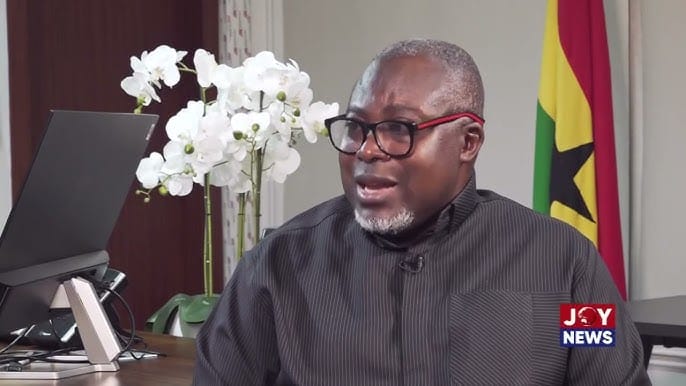
Partner at Deloitte, Yaw Appiah Lartey, has raised concerns over government’s capital expenditure performance, warning that a 40 per cent underspend could affect the implementation
The report indicates that partner at Deloitte, Yaw Appiah Lartey, has raised concerns over government’s capital expenditure performance, warning that a 40 per cent underspend could affect the implementation of major development projects.
It further notes that speaking on JoyNews’ Newsfile on Saturday, July 25, Mr Lartey stated while there were some positive outcomes from savings in compensation and interest payments, the shortfall in capital spending remained a major concern.
According to him, government had budgeted significantly for capital projects but failed to meet its spending targets during the period under review.
He explained that programme expenditure was projected at GH¢158 billion for the first quarter, but actual expenditure resulted in an underspend of about 20 per cent.
Mr Lartey noted that one of the positives was the reduction in compensation expenditure, which he attributed partly to improvements in payroll management and efforts to address issues such as ghost names.
He stated government’s actions in cleaning up the payroll helped save about GH¢3.4 billion.
Another area where government recorded savings, he noted, was interest payments, where about GH¢6.9 billion was saved due to lower policy rates and cheaper borrowing conditions.
“Government is borrowing at a much cheaper rate than it used to in the past, and that presents a positive development,” he said.
However, Mr Lartey emphasised that the major challenge was capital expenditure, which recorded an underspend of more than 40 per cent.
He questioned the pace of implementation of government’s ambitious capital programme, particularly projects that require significant public investment.
“On capital expenditure, we have an underspend of about 40 per cent. The question is how far we have progressed with the ambitious capital programme announced last year,” he said.
Mr Lartey cautioned that delays in executing planned projects could affect infrastructure delivery, including roads and other key development initiatives.
He, however, welcomed government’s approach of securing funding arrangements before beginning major projects, describing it as a positive shift that could prevent projects from being abandoned midway due to financing challenges.
According to him, historically, some capital projects have suffered because construction began without guaranteed funding, resulting in delays and cost pressures.