The Majority in Parliament has dismissed claims by the opposition New Patriotic Party (NPP) that the government's fiscal gains were achieved mainly through expenditure cuts, insist
The report indicates that the Majority in Parliament has dismissed claims by the opposition New Patriotic Party (NPP) that the government’s fiscal gains were achieved mainly through expenditure cuts, insisting that the country’s improving economic indicators are backed by the International Monetary Fund (IMF) and reflect prudent fiscal management.
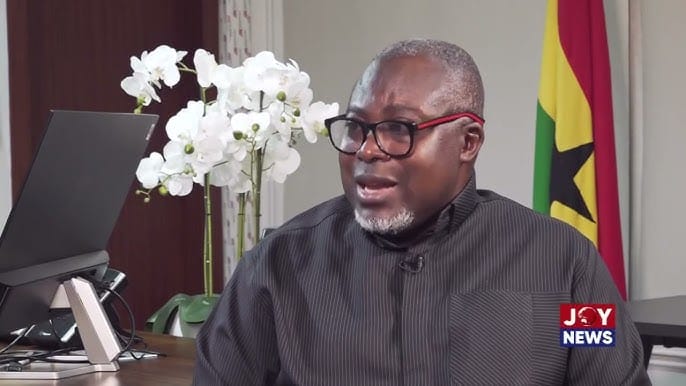
It further notes that speaking on Joy FM’s Top Story on Wednesday, July 22, Sagnarigu MP, Atta Issah, argued that the NPP’s assessment of the economy ahead of Thursday’s Mid-Year Budget Review ignored key findings from the IMF, which he stated had acknowledged Ghana’s strong fiscal performance under the current administration.
His comments were in response to a statement by NPP Policy Co-ordination Committee Chairman, Kojo Oppong Nkrumah, who had argued that government achieved its fiscal surplus by compressing expenditure rather than improving revenue mobilisation.
Mr Issah maintained that a fiscal balance simply reflects the difference between government revenue and expenditure and should not be interpreted as evidence of weak economic management.
According to him, expenditure adjustments were necessary to protect deficit and primary balance targets after government fell short of some revenue expectations.
He emphasised that despite the spending adjustments, critical sectors were protected.
“The government did not simply slash expenditure across the board. Essential public services were protected even though some revenue targets were missed,” he said.
The lawmaker also rejected suggestions that Ghana’s transition from the IMF’s Extended Credit Facility (ECF) to a Policy Coordination Instrument (PCI) demonstrates continued economic vulnerability.
He explained that the PCI is a non-financing programme designed for countries that have already restored macroeconomic stability and are seeking to strengthen policy credibility rather than access additional IMF funding.
“You cannot join a PCI programme if you do not have a stable macroeconomic environment. It is not a financing instrument. It signals policy credibility and sustained fiscal discipline,” he said.
Citing the IMF’s latest assessment of Ghana’s programme, Mr Issah stated the Fund had acknowledged that fiscal performance had strengthened significantly, with the primary surplus exceeding programme targets.
He added that the IMF had also attributed Ghana’s economic progress to stronger tax administration, digitalisation, improved compliance and expenditure controls.
On the NPP’s claim that recent economic growth has been driven largely by high gold prices, Mr Atta Issah disagreed, arguing that non-oil growth remained strong and demonstrated broader economic expansion.
“It is analytically incorrect to conclude that growth is solely because of gold. Non-oil growth remains robust, which shows that activity is not limited to the extractive sector,” he said.