Ghana’s informal cross-border trade with its three neighbouring countries (Togo, Burkina Faso, Ivory Coast) reached GH¢31 billion across the first three quarters of 2025, surpassin
The report indicates that ghana’s informal cross-border trade with its three neighbouring countries (Togo, Burkina Faso, Ivory Coast) reached GH¢31 billion across the first three quarters of 2025, surpassing the GH¢20.1 billion recorded through formal trade channels over the same period. This is according to new data from the Ghana Statistical Service (GSS).
It further notes that the figures, released by the GSS, underscore the significant role informal trade continues to play in regional commerce and highlight the need for policies that support, rather than penalise, traders operating outside formal systems.
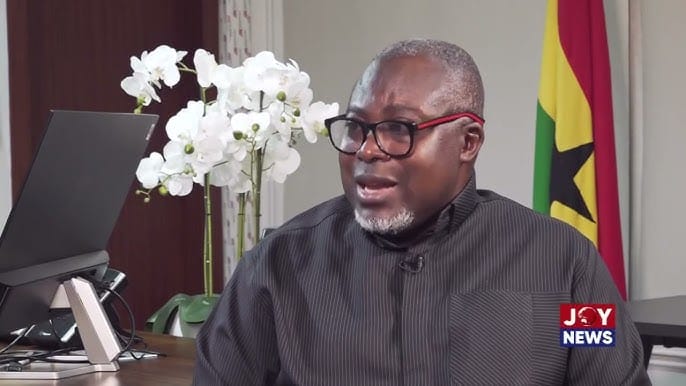
Speaking at the release of the report, Government Statistician, Dr. Alhassan Iddrisu stated total informal cross-border trade represented 6% of Ghana’s total trade between the first and third quarters of 2025.
“Total Informal Cross-Border Trade (ICBT) across the first three quarters of 2025 was GH¢31 billion. This represents 6% of total trade for the period Q1-Q3 2025,” he said.
He added that informal trade earnings exceeded formal trade with Ghana’s neighbouring countries, with informal trade amounting to GH¢31 billion compared to GH¢20.1 billion in formal trade.
The report showed Ghana maintained a trade surplus in both formal and informal trade throughout the period. However, the country’s informal trade surplus peaked at GH¢665.3 million in the second quarter before declining sharply to GH¢49.3 million in the third quarter.
Trade with Togo remained largely informal, with the informal share rising from 70.5% in the first quarter to 77.8% in the third quarter. In contrast, formal trade with Togo increased to 33.8% in Q2 before falling to 22.2% in Q3.
The GSS also found that informal trade consistently accounted for more than three-fifths of Ghana’s total trade with Côte d’Ivoire throughout the period.
Trade with Burkina Faso followed a different trend. While formal trade accounted for nearly 58% of total trade in the first quarter, informal trade became dominant in the second and third quarters, accounting for more than 52% of total trade.
Despite recording sustained trade surpluses with Burkina Faso and Côte d’Ivoire, Ghana’s trade deficit with Togo widened steadily from GH¢725.5 million in Q1 to GH¢994.1 million in Q3.
On exports, Burkina Faso remained the leading destination for Ghana’s agricultural products, accounting for an average of 62.9% of such exports. Togo was the largest destination for Ghana’s fuel exports, receiving an average of 44.1%, as well as food and beverage exports, each averaging 38.1%.
For imports, livestock was sourced mainly from Burkina Faso, while agricultural raw materials largely originated from Côte d’Ivoire. Most other imported commodities came predominantly from Togo throughout the three quarters.
Cooking oil remained the single largest informal import, although its share declined slightly from 16.3% in Q1 to 14.4% in Q3.
The report also highlighted Ghana’s persistent food trade deficit with its neighbours, which doubled from approximately GH¢400 million in the first quarter to GH¢800 million by the third quarter. Over the same period, the country’s non-food trade surplus narrowed from GH¢1 billion to GH¢800 million.