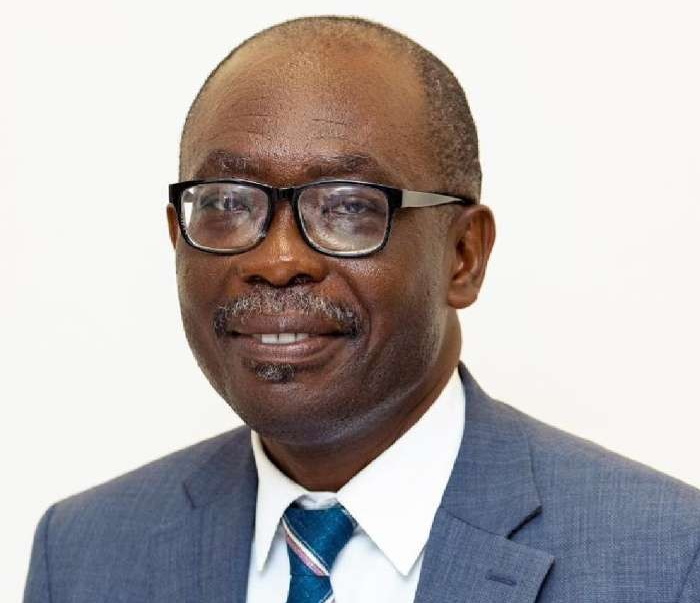
Senior lawyer and Vice President of IMANI Africa, Kofi Bentil, has argued that Ghana's persistent sanitation and flooding challenges are not the result of inadequate funding but ra
The report indicates that senior lawyer and Vice President of IMANI Africa, Kofi Bentil, has argued that Ghana’s persistent sanitation and flooding challenges are not the result of inadequate funding but rather a failure of leadership and long-term engineering planning.
It further notes that speaking on JoyNews’ Newsfile on Saturday, July 11, Bentil stated successive governments have invested hundreds of millions of dollars in drainage and flood mitigation projects over the years, yet many communities continue to experience devastating floods after heavy rainfall.
According to him, the country’s sanitation crisis cannot be solved through symbolic public activities or periodic clean-up campaigns but requires leaders who are prepared to undertake the difficult work of designing and implementing sustainable engineering solutions.
“Money is not our problem when it comes to sanitation,” Bentil said.
“Our problem is lazy leaders who refuse to do the heavy thinking because sanitation is an engineering challenge.”
Reflecting on his personal experience, Mr Bentil recalled working at Enterprise Insurance around the year 2000, when government was investing heavily in dredging the Korle Lagoon as part of efforts to reduce flooding in Accra.
He stated he regularly travelled to work along the Korle Bu–High Street route and questioned the long-term effectiveness of the intervention based on his understanding of physical geography.
“I used to work at Enterprise Insurance around 2000 and I always used the Korle High Street to go to work,” he recounted.
“Around that time they were spending around $35 million to dredge the Korle. I did geography and I told my friend that it wouldn’t work because of the dynamics of the sea and the river.”
Mr Bentil argued that subsequent investments have done little to fundamentally resolve the problem.
“Since that time till now, we have spent about $300 million, if you take the GARID project,” he said, referring to the Greater Accra Resilient and Integrated Development initiative aimed at improving flood risk management and urban resilience.
According to him, the continued occurrence of severe flooding despite significant expenditure demonstrates that Ghana’s challenge lies less in financing and more in how projects are conceived and executed.
Mr Bentil maintained that sanitation and flood management should be approached primarily as technical and engineering issues requiring careful planning, scientific analysis and long-term implementation.
Rather than relying on short-term interventions after flood events, he stated authorities should invest greater effort in understanding the structural causes of recurring flooding and developing permanent solutions.