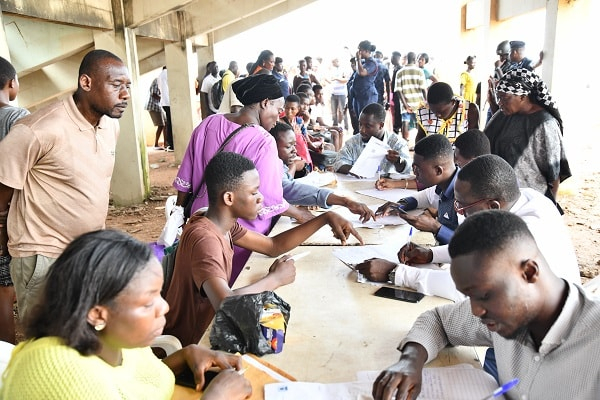
The youth constitute the backbone of every nation’s development agenda. Their energy, innovation, and productivity are essential ingredients for economic growth and social transfor
The report indicates that the youth constitute the backbone of every nation’s development agenda. Their energy, innovation, and productivity are essential ingredients for economic growth and social transformation. However, a growing phenomenon involving international online network marketing schemes is increasingly placing Ghanaian youth under siege, threatening their health, economic well-being, and prospects.
It further notes that across Ghana and neighbouring countries such as Nigeria, Côte d’Ivoire, Togo, and Burkina Faso, many young people are being attracted into online business opportunities that promise quick wealth, financial independence, and luxurious lifestyles. While some companies operating in the direct-selling industry maintain that they conduct legitimate business activities, concerns continue to emerge regarding recruitment methods employed by some independent agents and promoters who target vulnerable and unemployed youth.
My recent visit to the Nsawam-Adoagyiri Municipality, other cities, towns and villages indicated a disturbing reality that requires urgent attention from policymakers, public health authorities, law enforcement agencies, and community leaders.
During the visit, I observed situations where more than eight young individuals were occupying a single 10-by-10-foot room under poor living conditions with inadequate ventilation and limited sanitation facilities.
Such overcrowded conditions present significant public health risks. Poor ventilation and congestion increase the likelihood of communicable disease transmission, including respiratory infections, tuberculosis, skin diseases, and other health-related complications.
Beyond physical health concerns, the psychological effects of unmet financial expectations often lead to anxiety, stress, depression, and emotional trauma among recruits who have invested substantial resources into these ventures.
The issue extends beyond public health and enters the realm of national security. Numerous young people are persuaded to leave their homes, schools, and places of employment with the hope of achieving rapid financial success.
In many cases, recruits borrow money, sell personal belongings, or rely on family support to finance their participation. When anticipated returns fail to materialise, many are left financially distressed and socially vulnerable.
Particularly worrying is the increasing transnational nature of these activities. Young people from neighbouring countries continue to travel into Ghana, while some Ghanaians move across borders pursuing similar opportunities.
This movement creates challenges for immigration authorities, law enforcement agencies, and social protection systems. The potential exploitation of vulnerable youth through misleading recruitment tactics should be viewed as a matter of regional concern requiring coordinated responses among West African states.
The long-term implications for national development cannot be ignored. Instead of channelling their efforts into education, vocational training, entrepreneurship, agriculture, technology, and other productive sectors, many young people become consumed by recruitment-driven ventures that may not provide sustainable economic opportunities.
Consequently, valuable human capital is diverted from sectors that are critical to national growth and development.
The Government of Ghana, regulatory institutions, educational authorities, traditional leaders, religious organisations, civil society groups, and the media must work together to address this emerging challenge. Public education campaigns should be intensified to equip young people with the knowledge necessary to identify deceptive recruitment practices and unrealistic business promises. Schools and tertiary institutions should incorporate financial literacy and consumer protection education into their programmes.
Furthermore, relevant authorities should investigate reports of overcrowded accommodations and potential exploitation associated with such recruitment networks. Where violations of the law are identified, appropriate enforcement actions must be taken to protect vulnerable individuals and uphold public safety.