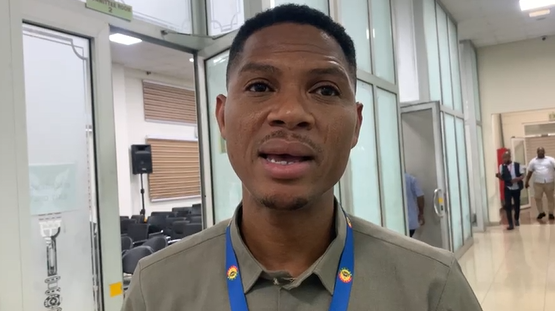
As Ghana continues to struggle with the devastating effects of perennial flooding, a Canadian-based data scientist is calling for a radical shift in how the nation manages its envi
The report indicates that as Ghana continues to struggle with the devastating effects of perennial flooding, a Canadian-based data scientist is calling for a radical shift in how the nation manages its environment.
It further notes that prof. Andy Ohemeng Asare, an assistant professor in data science analytics at the University of Calgary, Canada, is proposing the integration and use of data science and artificial intelligence (AI) as the blueprint to solving the country’s perennial flooding crisis.
Speaking in an exclusive interview with JoyNews from his Canadian base, Prof. Asare observed that traditional methods of managing floods may no longer be sufficient in an era driven by rapid technological advancement and climate unpredictability.
“It is a multi-disciplinary field. It means that it can be applied in all areas. Now our security agencies-in our say disaster management agencies like NADMO, Fire Service- there is a need for extensive training on how they can be more proactive on such situations. You cannot be proactive without using data science.”
Ghana, over the years, has faced perennial flooding that has led to loss of lives and property.
Promises and attempts to solve this have not yielded positive results as human development and climate change continue to drive flooding in major cities.
According to Professor Andy Asare, the world currently generates between 400 and 500 million terabytes of data daily through mobile phones, social media, banking, and business transactions.
He observed the government can harness data and move away from reactive measures by precisely predicting rainfall patterns to know when and how floods occur.
The former student of Agogo State SHS and Tamale Technical University student believes the antidote to solving what appear to be complex national challenges, such as floods, lies in a data-based approach and how data can be used to make informed decisions.
“When I travelled to University of Cape Coast 2-years ago, as part of the proposal was for us to come up with a new program that is Environmental Analytics. So the Environmental Analytics is whereby students now get opportunity to collect data sets, right, pertaining to let’s say natural disasters, areas of disaster, all of that, and then sit down, analyze, and say, okay, which areas in Ghana, which areas in Accra, okay, are prone to flooding?
And what contributes to this whole flooding issues? Is it about the population in these areas? Like pressure on that area? Is it about housing issues? Is it about sanitation issues? Now, without data sets, if you’re not able to analyze the, the, the true cause, or the underlying issue of this whole natural disasters happening in Ghana, there’s nothing that we can do to fix. And I stand to be corrected, because we need to address the issue from the grassroots,” he said.
“So, and that’s where data comes in because whatever decision that you make, whether you want to expand our bridges, or you want to expand our gutters, you want to demolish houses, you know, all of that, you need to base your decision on facts, and the facts will be the numbers that you have.
So, I would say, um, what, what happened few days ago in terms of the flooding in Ghana, to me, we, we can find something good from the bad”. Professor Asare added.
Highlighting the link between data science and artificial intelligence, he stated that AI serves as the engine that processes massive amounts of environmental and meteorological data.