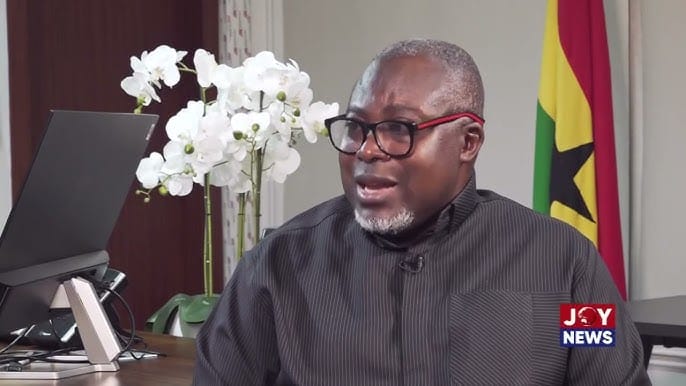
Arrests and prosecutions alone will not stop Ghana’s digital fraud problem, Economist and Professor of Finance at the University of Ghana Business School, Godfred Bokpin, has warne
The report indicates that arrests and prosecutions alone will not stop Ghana’s digital fraud problem, Economist and Professor of Finance at the University of Ghana Business School, Godfred Bokpin, has warned.
It further notes that he says the country must pair enforcement with stronger financial literacy and basic cybersecurity education as more people rely on mobile money, banking apps and other digital payment platforms.
“The law alone does not solve that problem. You also need higher public education. Higher financial literacy also helps, so that people understand how they use it and how they can protect their passwords,” Prof. Bokpin said.
The economist was speaking in a yet-to-be-aired documentary, “The Trust Crisis,” ahead of the maiden Digital Economy Forum under the theme, “The Trust Crisis: Why Fraud Is Holding Back Ghana’s Digital Economy.”
The thought-leadership platform, an initiative of Hubtel, will air on JoyNews and Joy FM on Wednesday, July 22, 2026, at 8 p.m.
The forum will bring together regulators, banks, fintech companies, telecommunications firms, security agencies and consumers to examine whether Ghana’s regulatory system is keeping pace with the growth of digital finance.
Prof. Bokpin stated digital fraud has both criminal and economic dimensions, making a purely legal response inadequate. He stated fraudsters are also adapting as more financial activity moves online. That, he said, makes basic user education critical.
“It is very difficult to separate the two. It is a crime, but of course, it is also driven by economic reasons. There are those who invest to ensure that they benefit from this fraud because that is a kind of profession for them all over the world.”
“When it comes to technology, it is not only available to those who want to use it for good. It is also available to those who want to use it for fraud. We need to mainstream basic tips and baseline knowledge on cyber fraud and cybersecurity across society.
“So that the apps are not only available, but people also understand how they can use them and how they can insulate themselves from basic fraud activities,” Prof. Bokpin said.
His comments come as Ghana records a rise in fraud cases across banks, specialised deposit-taking institutions and payment service providers.
The Bank of Ghana’s 2024 fraud report shows that reported fraud cases increased from 15,865 in 2023 to 16,733 in 2024.
The total value at risk also increased by 13 per cent, from GH¢88 million in 2023 to approximately GH¢99 million in 2024.
Payment service providers accounted for the bulk of the incidents.