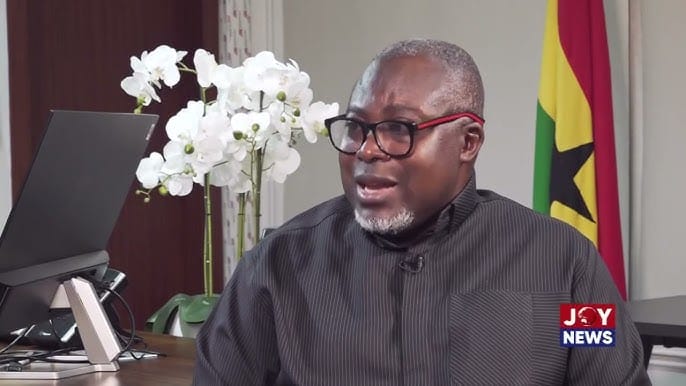
Ghana risks losing the recent stability of the cedi if it fails to make its manufacturing sector more competitive, Economist Prof. Festus Ebo Turkson has warned.
The report indicates that ghana risks losing the recent stability of the cedi if it fails to make its manufacturing sector more competitive, Economist Prof. Festus Ebo Turkson has warned.
It further notes that he argued that high electricity costs are forcing businesses to shut down and increasing the country’s dependence on imports.
Speaking on Joy News’ PM Express Business Edition on Thursday, Prof. Turkson stated the current economic stability provides the perfect opportunity for government to undertake structural reforms rather than wait.
“We are enjoying stability, and we need to build resilience. Resilience will come with a structural change,” he said.
He pointed to the resumption of crude oil supplies from the Jubilee Field to the Tema Oil Refinery (TOR) as an example of the kind of reforms Ghana should pursue.
“I was excited to see that TOR has received some oil from our Jubilee Fields to refine. That is a structural change. That change will allow us to reduce our imports of refined oil. That change will put less burden on the cedi.”
According to him, reducing imports will strengthen the local currency while creating conditions for businesses to expand.
“And if the cedi is relatively stable, inflation is low, the monetary policy rate is low, and interest rates are declining. That is a sort of environment that will allow businesses to expand.”
Prof. Turkson stated Ghana remains vulnerable to global shocks because its economy has not undergone the structural transformation needed to withstand external pressures.
“A lot of things are happening in the geopolitical external environment that have nothing to do with Ghana, but have significant implications for the Ghanaian economy. And so we need to begin to put in place policies that will structure our Ghanaian economy.”
He disagreed with suggestions that government should delay major reforms.
“So I do not entirely agree with Dalex Finance CEO, Joe Jackson, that we should think about stabilising and hold on a bit… the current government has the platform, and the environment to make those structural changes.”
The economist argued that electricity costs remain one of the biggest obstacles to industrial competitiveness.
“Another thing that is important is electricity. We need our businesses to be competitive, and those manufacturing companies that are on electricity are those that are even producing some of what we call the import subsidy.”