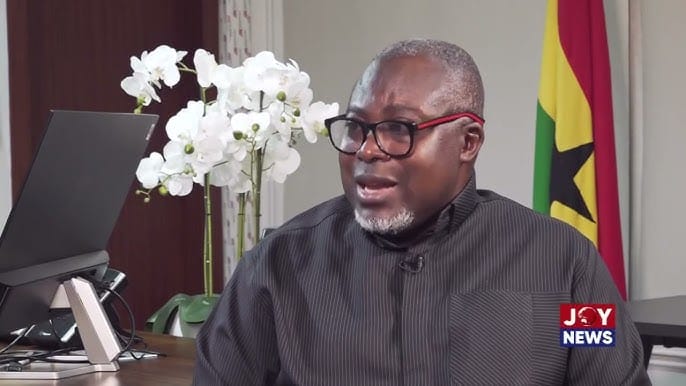
Energy analyst Kwadwo Poku has disputed the government’s claim that it has cleared all outstanding debts in Ghana’s energy sector, insisting that available figures do not support t
The report indicates that energy analyst Kwadwo Poku has disputed the government’s claim that it has cleared all outstanding debts in Ghana’s energy sector, insisting that available figures do not support the assertion.
It further notes that speaking at an NPP policy committee press conference on August 5, Mr Poku stated the data published by the Public Utilities Regulatory Commission (PURC) contradicts the Ministry of Finance’s claim that all energy sector indebtedness has been settled.
“The figures that have been published by PURC do not sustain the fact that they are clearing all the indebtedness in the energy sector,” Mr Poku said.
He explained that while the government has made progress in settling obligations owed to Independent Power Producers (IPPs), other debts within the sector remain unresolved.
“What they have done is that they have negotiated with the IPPs that the existing debts, which is about $1.1 billion, they are going to spread the payment over four years,” he stated.
Mr Poku acknowledged improvements in the energy sector’s cash waterfall arrangement, particularly the prioritisation of IPP payments.
“The first thing they do is that when money comes into the waterfall, they take care of all the IPP indebtedness. They pay off what we owe the IPPs so that there is no arrears in IPP bills. That is true. Nobody will deny that,” he said.
However, he argued that the remaining funds under the second level of the payment structure are not enough to clear debts owed to other key energy institutions.
“What is left in Level B, the residue of the money, is what they now share. Level B is for the state-owned enterprises and all the others,” he explained.
He mentioned institutions such as the Volta River Authority (VRA), Ghana Grid Company Limited (GRIDCo), and Ghana National Gas Company as still facing financial obligations.
Mr Poku also attributed the recent stability in electricity supply partly to favourable weather conditions rather than a complete solution to the country’s energy challenges.
“When I first stated the lights don’t go off within this period because of the weather, people laughed at me. Today, the Energy Commission’s outlook has actually admitted that between June, July, and August, the weather is cold and people do not put on air conditioners,” he said.
He added that reduced demand during the cooler months helps ease pressure on the national grid.
“That brings about 300 megawatts to 350 megawatts of pressure that comes off the grid,” Mr. Poku noted.