Criminals are no longer only looking for cash in people’s pockets, shops or homes. As more payments move onto phones, apps and digital platforms, Economist and Professor of Finance
The report indicates that criminals are no longer only looking for cash in people’s pockets, shops or homes.
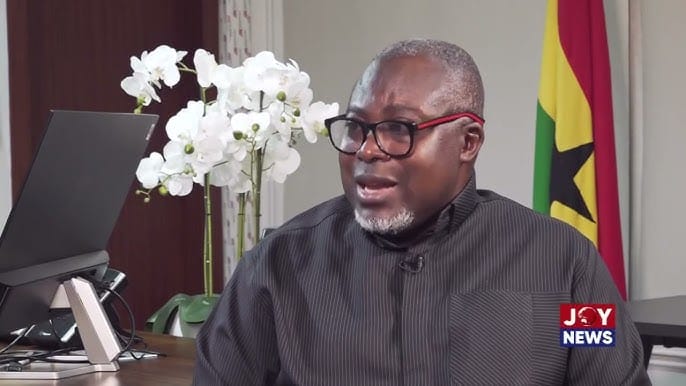
It further notes that as more payments move onto phones, apps and digital platforms, Economist and Professor of Finance at the University of Ghana Business School, Godfred Bokpin, says fraudsters are also moving online. He says the shift is expected because criminals follow the money.
“If you look at the trend, from reports by the Bank of Ghana and also from the UN, you realise that with increasing digitisation and digital payments, you see a switch from physical crime, in terms of physical theft and cash, moving more online. These days, it is easier for criminals to meet people online than in physical locations,” Prof. Bokpin said.
Prof. Bokpin was speaking in a yet-to-be-aired documentary, “The Trust Crisis,” ahead of the maiden Digital Economy Forum under the theme, “The Trust Crisis: Why Fraud Is Holding Back Ghana’s Digital Economy.”
The thought-leadership platform, an initiative of Hubtel, will air on JoyNews and Joy FM on Wednesday, July 22, 2026, at 8 p.m.
The forum will bring together regulators, banks, fintech companies, telecommunications firms, security agencies and consumers to examine whether Ghana’s regulatory system is keeping pace with the growth of digital finance.
The economist stated the growth of digital payments has changed the target for criminals. People may be carrying less physical cash, but they are moving more money through mobile money wallets, banking apps and other electronic platforms.
“Having monitored those patterns, they also operate more online than in physical locations because it is easier to see that people are not carrying much cash today, but they are heavily involved in cash transactions online. So, given that online presence is increasing, you should expect that digital fraud will also increase because criminals also follow the money,” he said.
The Bank of Ghana’s 2024 Payment Systems Oversight Annual Report says payment service providers processed about 8.1 billion transactions valued at approximately GH¢3 trillion in 2024. The central bank stated Ghana’s payment landscape remained buoyant and robust as adoption of digital payments increased.
But fraud has also increased across the financial sector.
The Bank of Ghana’s 2024 fraud report shows that banks, specialised deposit-taking institutions and payment service providers recorded 16,733 fraud cases in 2024, up from 15,865 in 2023. The report covers attempted and successful fraudulent activities recorded from January to December 2024.
Payment service providers recorded 15,673 fraud cases in 2024, representing a seven per cent increase from 2023. The value at risk in the sector also rose by 18 per cent to approximately GH¢19 million.
Prof. Bokpin stated the pattern should not surprise policymakers or regulators because the digital economy is now the direction of global growth. According to him, criminals are also studying the same direction of travel.
“That is where the world is heading, and we do not have an option. Economies are increasingly being digitised, especially in payments, and substantial investment has also been made in infrastructure to enable digital payments. It is not surprising when you find criminals, who follow the money and the trend, also doing their analysis and projections, seeing where the flow is going, and preparing towards that as well,” he said.