Banks and fintech companies are raising competing concerns over regulation in Ghana’s digital financial sector, with each side suggesting the other operates under a lighter supervi
The report indicates that banks and fintech companies are raising competing concerns over regulation in Ghana’s digital financial sector, with each side suggesting the other operates under a lighter supervisory regime.
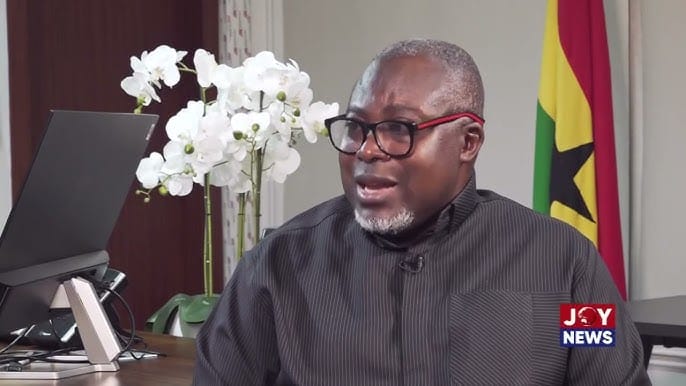
It further notes that but the Head of Fintech and Innovation at the Bank of Ghana, Elhanan Owureku Asare, says the dispute should not distract from the bigger risk: fraud can move across the entire financial system.
“The Bankers’ Association, for example, was concerned that the banks are more heavily regulated than the fintechs. He is calling for the same regulation, if you like – put them on the same pedestal, improve collaboration and achieve the same results. If one part of the chain is weak, it affects everybody,” Mr. Asare said.
He stated fintech companies also believe banks receive comparatively favourable treatment.
“Interestingly, the fintechs also feel that the banks are less regulated in relation to them. But that is beside the point,” he said.
Mr. Asare was speaking in a yet-to-be-aired documentary, “The Trust Crisis,” ahead of the maiden Digital Economy Forum under the theme, “The Trust Crisis: Why Fraud Is Holding Back Ghana’s Digital Economy.”
The thought-leadership platform, an initiative of Hubtel, will air on JoyNews and Joy FM on Wednesday, July 22, 2026, at 8 p.m.
Banks and fintech companies operate under different regulatory frameworks because their activities and risk profiles differ.
Banks and specialised deposit-taking institutions are regulated mainly under the Banks and Specialised Deposit-Taking Institutions Act, 2016, Act 930.
Payment service providers and dedicated electronic money issuers, including mobile money operators, are regulated under the Payment Systems and Services Act, 2019, Act 987.
The issue, therefore, is not whether all institutions should operate under identical rules. It is whether the different rules provide equally strong protection against fraud.
That question has become more important as digital transactions increasingly move across mobile money wallets, banks, fintech platforms and payment processors.
A weakness in one institution can expose the rest of the payment chain.
Mr. Asare stated Ghana needs a coordinated response rather than separate fraud-control systems for different parts of the industry.